

At a glance
- At Deniz Yıldızı, a home program, parent coaching, and feedback with video are offered to families for off-session hours.
- Parent coaching is structured specifically for each family; needs such as the child's learning style, the family's conditions, and acceptance level are taken into account.
- In collaboration with the school, meetings with the teacher, homework plans, and school visits are made; this communication begins with the family's approval.
- Collaboration is maintained with educators working with your child outside the institution through regular phone calls and face-to-face visits when necessary.
- Bilingualism alone does not cause delayed speech in children growing up bilingual; if there is no additional condition in the expert evaluation, reducing to a single language is not recommended.
Prepared by: Deniz Yıldızı Special Education content team · Scientific review: Psychologist (MSc) Burcu Cebeci Gürel · Last updated: 15 September 2026
Why should the family be part of the education process?
A skill learned by a child becomes a part of their daily life only when it is repeated in different environments and with different people. Being able to use a communication skill worked on in the session at the dinner table at home, in the park, or at school is possible with the support of the family and the teacher in the same direction.
Therefore, parent coaching takes place as a separate step in our process. The goal is not to turn parents into therapists, but to help you understand your child's needs and take small but consistent steps in daily routines.
Every family's conditions are different: working hours, siblings, people you can get support from, your readiness level for the process. We plan our suggestions according to this reality.
What supports are offered to the family outside the session?
Home program
Activities and suggestions in line with the goals in your child's program, which can be integrated into daily routines at home.
Parent coaching
Meetings where you reflect with the expert on how to behave in moments of difficulty and how to increase interaction with your child.
Feedback with video
Providing concrete feedback on your practices over short videos you shoot at home. Thus, written suggestions turn into real moments.
Family-specific parent coaching
Education structured separately for each family, considering conditions such as the child's learning style, the parent's education level, and the acceptance process.
How is parent coaching structured?
At Deniz Yıldızı, the child is first worked with individually. During this process, how your child learns, what motivates them, and where they struggle are observed.
Parent coaching is built upon these observations. Instead of a ready-made package; it is planned taking into account conditions and needs specific to the family, such as the child's learning style, the parent's education level, and the acceptance level of the diagnosis or condition.
For instance, the needs of a family who has newly received a diagnosis and is going through an emotionally difficult period are not the same as a family who has been in the process for years. The content and pace of the education change accordingly.
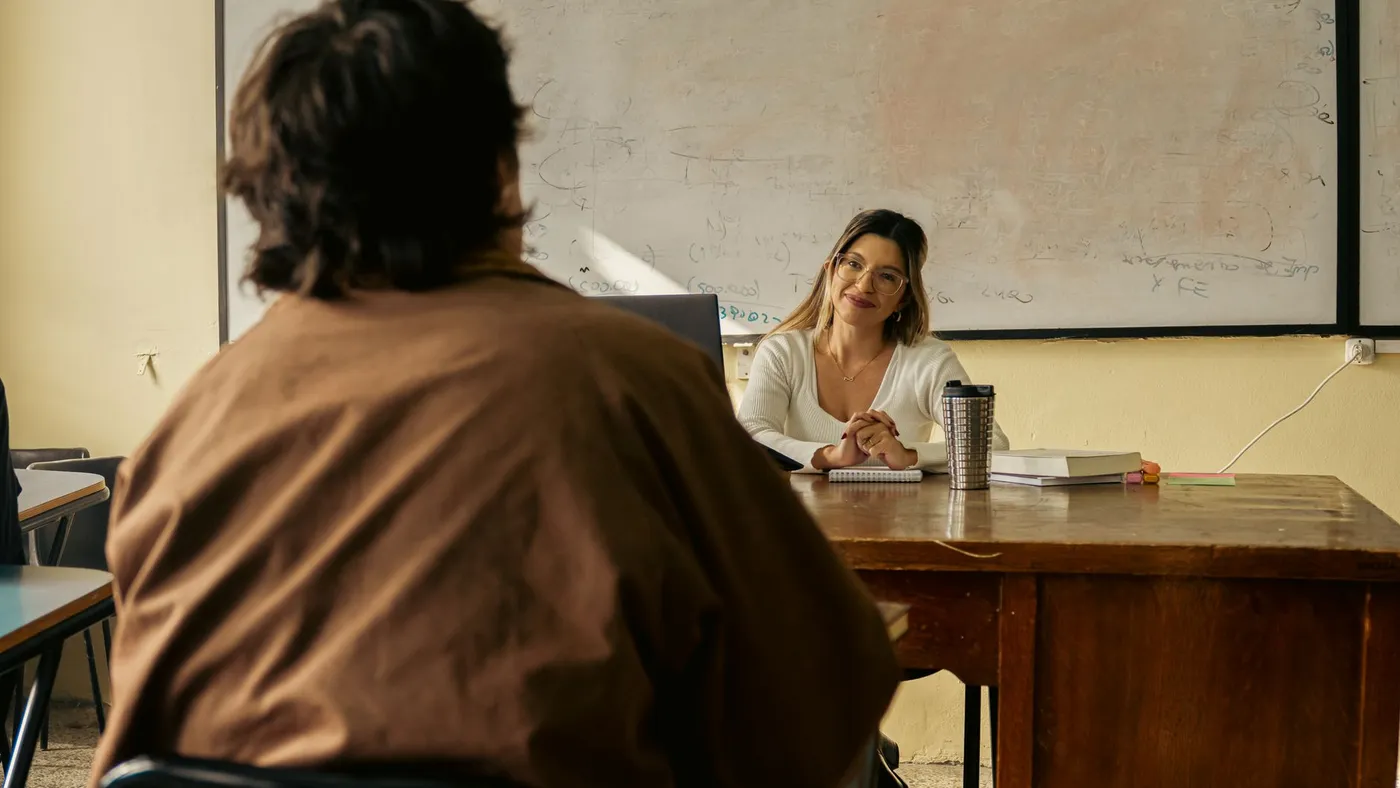
How is collaboration with the school established?
We explain the importance of collaboration with the school to every family. Communication begins only when the family approves.
1. Talking with the family and approval
First, we discuss with you which information will be shared with the school and for what purpose. The decision is yours; the school is not contacted without your approval.
2. Meeting with the teacher
By meeting with the classroom teacher or school counsellor, we listen to your child's situation in class, moments when they struggle and are good, and share our work at the institution.
3. Homework plan
We discuss with the teacher and your family how homework can be planned in a way that doesn't overwhelm your child and suits their capability.
4. School visit
When necessary, we visit the school, observe your child in their own classroom environment, and meet face-to-face with the teacher.
5. Continuity with external educators
If there are educators working with your child in another institution or individually, we maintain collaboration through regular phone calls. If needed, we make face-to-face institution visits together with our education coordinator and educator.
Who does what at home, at school, and in the institution?
| Environment | Who | What do they do? |
|---|---|---|
| Institution | Our team | Conducts the evaluation, prepares the individual program, works on goals in sessions, provides brief information to the parent at the end of every session |
| Home | Family | Integrates the suggestions in the home program into daily routines, shares observations and videos |
| School | Teacher | Shares observations in the classroom, collaborates on homework plans and classroom needs |
| External educator | Other experts if any | Shares information through regular phone calls and face-to-face visits when necessary |
What should I do and avoid at home?
The following are general suggestions. What is specifically appropriate for your child will become clear with the evaluation and home program.
Supportive steps
- Setting aside a short, face-to-face, screen-free, and reciprocal playtime every day
- Following your child's interests, joining their play, and describing what they do with words
- Keeping daily routines (meals, bath, sleep) predictable and consistent
- Applying the suggestions in the home program in small pieces, regularly
- Taking notes of moments of difficulty or recording short videos and sharing them with the expert
Things to pay attention to
- Not allowing screen time to replace reciprocal interaction
- Discussing your questions about pacifier and bottle use with the expert
- Instead of trying every method read on the internet, consulting the team first
- Not constantly comparing the child with their siblings or peers
- Not deciding to reduce to a single language without an expert's recommendation in bilingual families
If two languages are spoken at home, should we reduce it to one?
Bilingualism alone does not cause delayed speech; on the contrary, it expands the child's language capacity. Therefore, if there is no additional condition seen in the expert evaluation, we do not recommend reducing it to a single language.
Every child's situation is different. If you have a concern about language development in your child, the decision is made according to the evaluation of the speech and language therapist.
How do you work with the school and family for my child's emotional needs?
In some children, while skills in one area are far ahead of their peers, social or emotional development may progress at a different pace. We explain this situation to the family with examples in the meeting, add social-emotional goals to the program, and share it with the school if the family approves.
We offer individual support, group work, and parent counseling on issues such as perfectionism, low frustration tolerance, and intense sensitivities.
What should I mention when talking to the teacher?
The following topics make the conversation easier when you go to meet with the teacher. You decide what information to share.
- The areas your child is good at, enjoys, and is strong in at home
- The situations they struggle with and what helps them in those moments
- Which of the goals worked on in the institution can also be supported in class
- Your observations about the homework load and how homework goes at home
- Whether the teacher can share their observations in the classroom with you and our team
Frequently asked questions
How do you support me at home outside of sessions?
We offer a home program, parent coaching, and video feedback to families. In this way, goals worked on in the session can be maintained at home.
How does video feedback work?
You share an activity you do with your child at home with a short video, and our expert gives you concrete suggestions based on this video. It becomes easier to see how written suggestions will be applied in daily life.
Is parent coaching given to everyone in the same way?
No. Parent coaching is structured specifically for each family. Conditions and needs such as the child's learning style, the parent's education level, and the acceptance process are taken into account.
What is required for you to contact the school?
The family's approval is required. We explain the importance of school collaboration to every family; if the family agrees, we contact the teacher.
What is done in school collaboration?
We hold meetings with the teacher, make homework plans, and conduct school visits when necessary. The aim is to see your child's needs in the classroom together and to take steps in the same direction.
My child is also receiving education elsewhere; can you communicate with them?
Yes. If external educators also want to maintain collaboration, we make regular phone calls. If necessary, we also make face-to-face institution visits together with our education coordinator and educator.
We speak two languages at home, should we reduce to one?
Bilingualism alone does not cause delayed speech, it increases the child's language capacity. Unless there is an additional condition in the expert evaluation, we do not recommend reducing to a single language.
Does screen time and pacifier use affect language development?
Prolonged use of pacifiers and bottles, screen exposure, and lack of reciprocal interaction are issues related to language development. We discuss these in detail during the parent meeting depending on your child's situation.
How much should I work at home every day?
This varies according to the child's program and the family's conditions, so we do not give a general duration. Sustainable suggestions suitable for your child and daily routine are jointly determined in the home program.
Should the school know my child's diagnosis?
This decision belongs to the family. We discuss the contribution of collaboration to the child with you; you decide what information to share.
When does parent coaching start?
First, the child is worked with individually, and how your child learns is observed. Parent coaching is planned based on these observations and your family's conditions.
Are school visits made for every child?
School visits are made when necessary and with the family's approval. Collaboration steps such as teacher meetings and homework plans are also determined by discussing with the family.
Is there support for my child's emotional difficulties?
Yes. We offer individual support, group work, and parent counseling on issues such as perfectionism, low frustration tolerance, and intense sensitivities. When necessary, social-emotional goals are added to the program.
