

At a glance
- At Deniz Yıldızı, standardized assessment tools are used in the areas of language, speech, reading-writing, attention, intelligence, and early development.
- Each test is administered by the expert in its field: language tests by the speech and language therapist, reading-writing tests by the special education teacher, and intelligence, cognitive, and developmental tests by the psychologist.
- Most tests take 30–60 minutes; WISC-IV, WISC-R, and CAS take more than 1 hour.
- A screening test does not diagnose. A test result is not a decision on its own; it is interpreted alongside observation and information received from the family.
- The results are explained to the parent by relating them to the child's daily life, not just limited to scores.
Prepared by: Deniz Yıldızı Special Education content team · Scientific review: Psychologist (MSc) Burcu Cebeci Gürel · Last updated: 15 September 2026
Why is an assessment being done for my child?
Assessment allows us to understand in which skills your child is strong, in which areas they need support, and the level of this need. A good education program can only be built by knowing the child accurately.
At our center, an assessment is not just a single test. Standardized tests, observations made during play and tasks, detailed information from the family, and, when necessary, the opinion of the school or experts who know the child from before are all considered together.
Not every test is given to every child. Which tool will be used is decided based on the child's age, the family's concern, and the information obtained in the comprehensive expert consultation.
Which tests are administered at the center, who administers them, how long do they take?
The list below shows the main assessment tools used at our center. The 'What does it measure?' column explains the general purpose of the test; our expert decides which one is necessary for your child.
| Test | What does it measure? | Administered by? | Duration | Usage at the center |
|---|---|---|---|---|
| SST — Articulation and Phonology Test | Identifies which sounds the child makes errors on and whether this is developmental or a disorder; provides general information about phonological processes | Speech and language therapist | 30–60 minutes | Administered regularly |
| TEDİL — Test of Early Language Development in Turkish | Looks at language components like meaning, sentence structure, and grammar; gives information about receptive and expressive language and provides a language age | Speech and language therapist | — | Administered occasionally |
| TİFALDİ — Turkish Expressive and Receptive Language Vocabulary Test | Measures receptive (understood) and expressive (spoken) vocabulary skills at the word level | Speech and language therapist | 30–60 minutes | Administered occasionally |
| OYAB — Reading-Writing Assessment Battery | Assesses reading and writing skills in detail; guides when a learning disability is suspected | Special education teacher | 30–60 minutes | Administered and repeated according to need |
| EROT — Early Literacy Test | Evaluates the early literacy skills required before transitioning to reading | Special education teacher | 30–60 minutes | Administered and repeated according to need |
| CAS — Cognitive Assessment System | Based on the PASS theory; measures planning, attention, simultaneous, and successive cognitive processes | Psychologist | More than 1 hour | For children over the age of 5 who show risks in attention and executive functions |
| MOXO — Continuous Performance Test | Provides supportive data on attention, timing, impulsivity, and hyperactivity in a computer environment | — | — | Administered; does not diagnose on its own, it is supportive data |
| AGTE — Ankara Developmental Screening Inventory | Screens the language-cognitive, motor, social skill, and self-care development of children aged 0–6 using information obtained from the family | Psychologist | 30–60 minutes | Administered occasionally |
| DENVER II — Developmental Screening Test | Screens personal-social, fine motor, language, and gross motor development in children aged 0–6 | Psychologist | 30–60 minutes | Administered occasionally |
| M-CHAT-R/F | Screens for autism spectrum risk signs in young children using information from the family | — | — | Used in early period (0–6 years) screening |
| WISC-IV / WISC-R — Intelligence scale for children | Evaluates general intellectual functioning with full-scale score and index scores | Psychologist | More than 1 hour | Administered occasionally; unless there is a special condition, WISC-IV is preferred |
| Sensory Profile Questionnaire | Helps to understand how the child reacts to sounds, touch, movement, and other sensory stimuli | — | — | Evaluated together with standard scales, observation, and family information; occupational therapy is coordinated within the center |

For which concern is an assessment done in which area?
The same concern can stem from different reasons. Therefore, tests are grouped by areas and used together when necessary.
Speech and language
Inability to produce sounds correctly, limited vocabulary, difficulty forming sentences. SST, TEDİL, and TİFALDİ are administered by a speech and language therapist.
Reading and writing
Mixing up letters, slow reading, struggling with writing, or difficulty in preparing to read. OYAB and EROT are administered by a special education teacher.
Attention and executive functions
Focusing, planning, controlling impulses, and carrying out tasks sequentially. CAS is administered by a psychologist; MOXO provides supportive data.
Intellectual functioning
General intellectual strengths and the balance between different thinking areas. WISC-IV or WISC-R is administered by a psychologist.
Early development (0–6 years)
Age-appropriateness of movement, language, social skill, and self-care development. DENVER II and AGTE are administered by a psychologist; M-CHAT-R/F is also used in screening.
Sensory processing
Overreacting or underreacting to sounds, touch, or movement. The sensory profile questionnaire is evaluated together with observation and family information.
How does the assessment process proceed step by step?
Scheduling an appointment
When you call us, our assistant schedules a day for a comprehensive expert consultation. Requests from the website are replied to on the same day.
Comprehensive Expert Consultation
In a consultation lasting about 1 hour, Burcu Cebeci Gürel takes a detailed developmental history (anamnesis) and provides a verbal evaluation.
Test selection
Depending on the child's age and needs, the relevant expert decides which tests will be applied; not every test is given to every child.
Administration and observation
Tests are administered by the expert in their respective field. The child's behaviors during the task are also noted.
Joint interpretation of results
Test scores, observations, and information from the family are considered together. If necessary, the school's opinion and the opinion of an expert who previously knew the child are also added.
Explanation to the parent and referral
Results are explained with real-life examples. If there is suspicion, a referral is made to a physician with an observation report; if needed, parent coaching and a program are planned.
Is a test result a diagnosis? The difference between screening and diagnosis
One of the most important pieces of information for families is this: the tests administered at our center do not diagnose. Our tests help us ask the right questions and plan the right support.
What does an assessment give you?
- Shows your child's strong areas and the areas where they need support
- Ensures the correct selection of goals in the education program
- Helps track progress concretely when repeated
- Facilitates referral to a physician with an observation report if necessary
Things you need to know
- A screening test does not diagnose; it catches risk signs and guides
- Attention tests like MOXO do not diagnose on their own, they are supportive data
- A single test result is not a decision on its own
- The child's tiredness or compliance on that day can affect the result; it is interpreted alongside observation
How are test results explained to the parent?
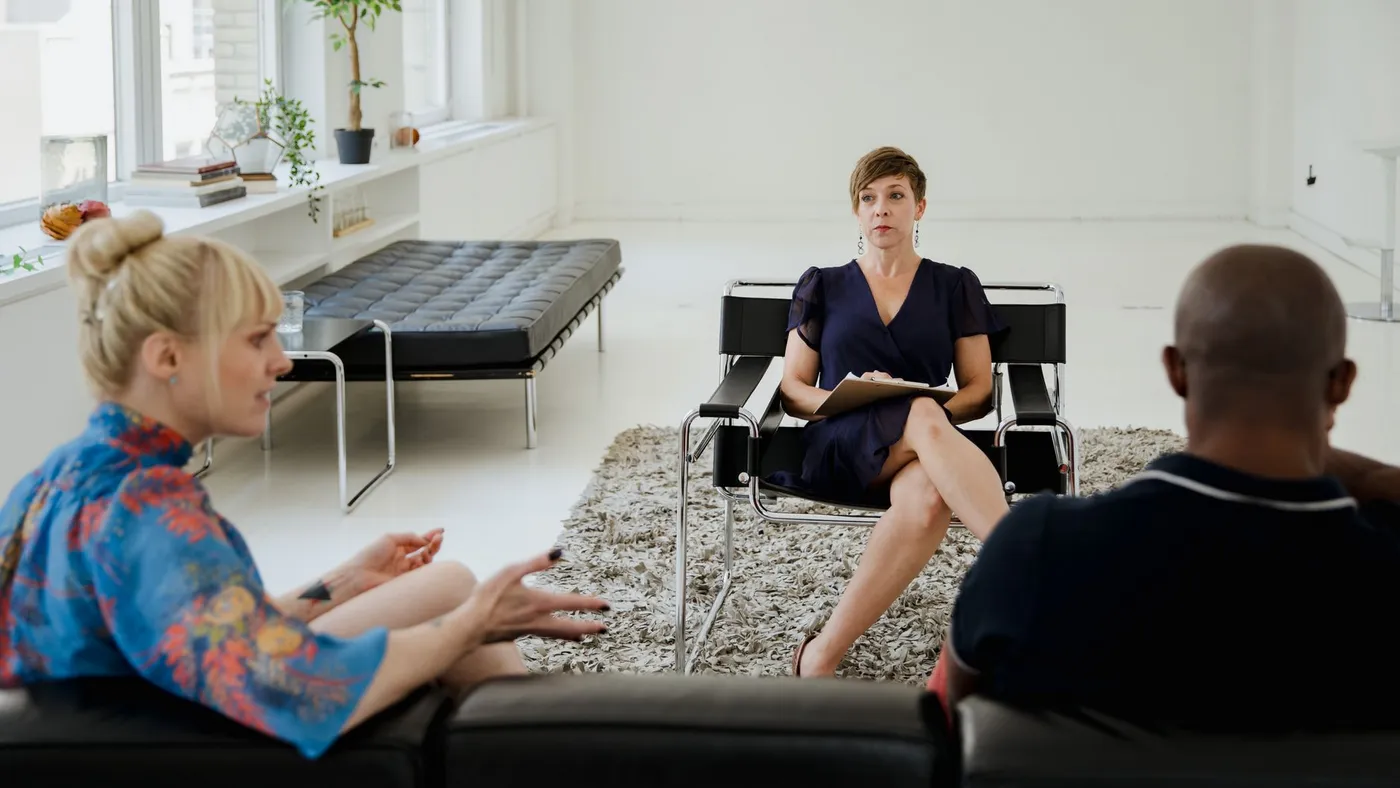
A test report can cause anxiety instead of comforting the family when the terms inside are not understood. That is why we explain the results not just with scores, but with examples from your child's daily life: 'This score might look like this at home, this might be the reason they struggle in this situation at school.'
In a language assessment, we explain comprehension and expression skills separately; the needs of the two areas can be different. In an intelligence assessment, we share the full-scale score together with the index scores, explaining the child's profile.
We allocate time for your questions after the assessment. After the program starts, we track progress with periodic test repetitions and observation notes, and we give you brief information at the end of every session.
What do the terms in assessment reports mean?
- Screening test
- A preliminary assessment that quickly shows whether development is age-appropriate, which does not diagnose.
- Standardized test
- A test given to every child with the same instruction, whose results can be compared with peers.
- Receptive language
- The child's ability to understand what is spoken.
- Expressive language
- The child's ability to express their thoughts with words and sentences.
- Language age
- A value showing which age level the child's language skills correspond to.
- Phonological process
- Children systematically simplifying sounds as they learn to speak; some are developmental.
- Executive functions
- Skills for planning, sustaining attention, controlling impulses, and carrying out tasks sequentially.
- PASS theory
- A theory that approaches cognitive functioning as planning, attention, simultaneous, and successive processing; CAS is based on this.
- Index score
- A sub-score indicating a specific thinking area in an intelligence test.
- Anamnesis
- Taking the child's pregnancy, birth, and developmental history in detail from the family.
Frequently asked questions
Which tests are administered at your center?
SST, TEDİL, TİFALDİ, OYAB, EROT, CAS, MOXO, AGTE, DENVER II, M-CHAT-R/F, WISC-IV / WISC-R, and the sensory profile questionnaire are used. Not every test is given to every child; they are chosen based on need.
Who administers the tests?
Speech and language tests (SST, TEDİL, TİFALDİ) are administered by a speech and language therapist, and reading-writing tests (OYAB, EROT) by a special education teacher. CAS, AGTE, DENVER II, and WISC tests are administered by a psychologist.
How long does a test take?
SST, TİFALDİ, OYAB, EROT, AGTE, and DENVER II take about 30–60 minutes. WISC-IV, WISC-R, and CAS take more than 1 hour.
Does a test result replace a diagnosis?
No. The tests administered at our center do not diagnose. When there is suspicion, we make a referral to a physician with an observation report.
Does the MOXO test definitively show ADHD?
No. MOXO does not diagnose on its own, it is supportive data. Results are evaluated together with observation, family, and school information.
Which children is the CAS test administered to?
At our center, CAS is administered to children over the age of 5 who show risks in the area of attention and executive functions. The test is given by a psychologist and takes more than 1 hour.
What is the difference between WISC-R and WISC-IV?
WISC-IV is the more up-to-date version of the same intelligence scale. Unless there is a special condition, WISC-IV is preferred at our center; WISC-R is used when necessary.
Why are TEDİL and TİFALDİ different tests?
TİFALDİ measures receptive and expressive vocabulary skills at the word level. TEDİL looks at language components like meaning, sentence structure, and grammar, and provides a language age.
What does the SST test show?
SST helps to understand which sound or sounds the child makes errors on, and whether this is developmental or a disorder. It also gives general information about phonological processes.
Are reading and writing tests repeated?
Yes. OYAB and EROT are administered according to need and are repeated. This way, the child's progress can be tracked concretely.
What developmental tests can be done for my baby?
For ages 0–6, screening tools like M-CHAT-R/F, AGTE, and DENVER II are used. AGTE and DENVER II are administered by a psychologist and take 30–60 minutes.
How are sensory sensitivities evaluated?
The sensory profile questionnaire, observation, and detailed information from the family are used together; if available, the opinion of an expert who previously knew the child is also taken. Occupational therapy is coordinated with the occupational therapist within the center.
How will you explain the results to me?
We explain the results not just with scores, but with examples from your child's daily life. We allocate time for your questions and talk about the next steps together.
Where should I start for an assessment?
The first step is the comprehensive expert consultation. Burcu Cebeci Gürel takes a detailed history in a consultation lasting about 1 hour and discusses which assessments might be necessary with you.
How do you know if the program is working after the assessment?
We track progress with periodic test repetitions and observation notes. The individualized education program is updated every 3 months, and you are given brief information at the end of each session.
